Breathwork & Movement Training in Columbus, Ohio
Breath & Movement sessions combine breathing mechanics, assisted movement, and Thai bodywork to improve how the body manages pressure, tension, and recovery.
While hands-on bodywork can release tight tissue, many tension patterns are influenced by how the body breathes and stabilizes under load. When breathing becomes shallow or constantly braced, other areas often begin compensating, especially the neck, ribs, hips, and low back.
These sessions focus on changing those patterns directly.
Through guided breathing, assisted movement, and Thai bodywork techniques, the body learns to distribute pressure more efficiently so tension doesn’t accumulate in the same places over and over.
The result is often a body that feels easier to move, easier to breathe, and more resilient under stress.
Why Work on Breathing?
Most people think of breathing as something automatic.
It is.
Until it isn’t.
Chronic stress, long work hours, heavy training, and repeated bracing patterns can gradually change how you breathe. Over time that affects how pressure moves through the body, how tension shows up, and how well you recover between periods of stress.
When breathing becomes shallow, upper-chest dominant, or constantly braced, other areas begin to compensate. The neck, ribs, low back, and pelvic floor often start carrying the load.
You can stretch those areas endlessly and still feel tight.
Because the pattern driving them hasn’t changed.
What This Is
These sessions combine breathing mechanics, assisted movement, and Thai bodywork to change how the body manages pressure and tension.
This isn’t group breathwork.
It isn’t guided relaxation.
And it isn’t emotional catharsis.
Breathing is treated as a mechanical and neurological input that influences how the entire body organizes itself under load.
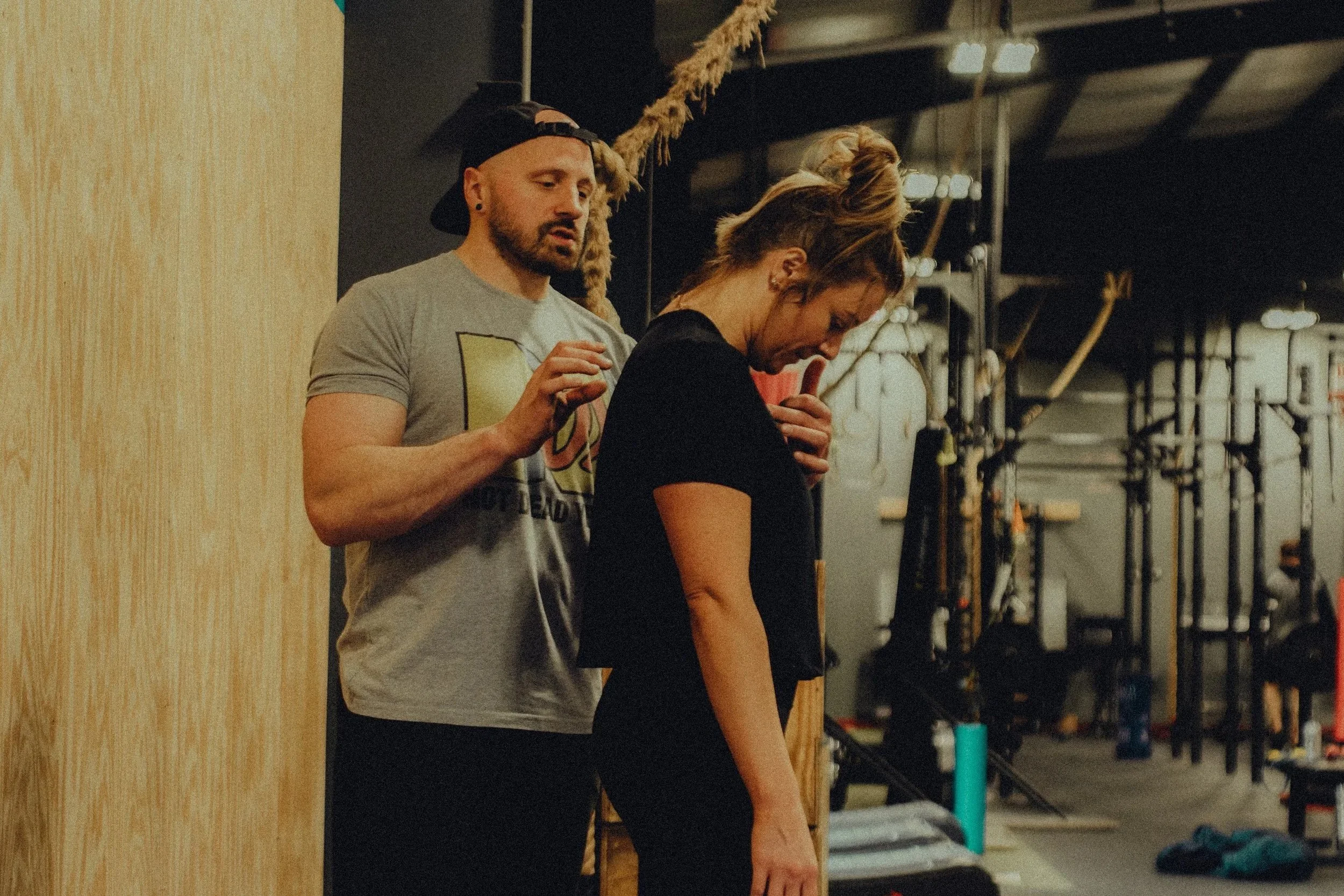
During sessions, breathing patterns are explored through specific positions and guided movement. Thai bodywork techniques are often used to assist mobility through the ribs, spine, and hips while the breath helps the body reorganize how pressure moves through the system.
The goal is control.
Control under stress.
Control under movement.
Control without unnecessary bracing.


Why Breathing Matters More Than Most People Realize
Most people don’t think of breathing as something that needs attention.
But breathing is how the body manages internal pressure. It influences how the ribs move, how the spine stabilizes, and how the neck, hips, and low back respond under load.
If that pattern is inefficient, tension often returns no matter how much hands-on work is done.
Bodywork can create change.
Breathing helps that change hold.
When breathing patterns improve, pressure distributes more evenly through the body. Movement becomes easier, and areas that once compensated don’t have to work as hard.
How Breath & Movement Sessions Work
Breath & Movement sessions explore how breathing, movement, and tension patterns interact in your body.
Sessions usually begin by observing how you breathe in different positions and how your ribs, spine, and hips respond when load changes.
From there, specific positions, guided breathing, and assisted movement are used to see how your system adapts when pressure is redirected through the body.
Thai bodywork techniques are often incorporated to assist mobility through the ribs, hips, and spine while breathing patterns are being adjusted. This allows the body to experience a different pattern rather than simply being told to breathe differently.
Some sessions feel quiet and exploratory. Others involve more movement and positional work.
The pace stays deliberate so the body has time to adapt instead of bracing or forcing change.
What Changes Over Time
People who work on breathing and movement patterns often notice gradual shifts in how their body handles stress and load.
Breathing becomes deeper and less restricted. The ribs move more freely, and the neck and shoulders stop working as hard to assist every breath. Movement begins to feel smoother and less guarded.
Over time, many people notice that tension builds more slowly during long workdays or demanding training cycles. Recovery improves, and the body feels less reactive under pressure.
These changes usually develop progressively rather than all at once.
The goal isn’t simply to relax the body.
It’s to improve how the body manages pressure so tension doesn’t accumulate as easily in the first place.
Who This Is For
Breath & Movement sessions tend to help people who feel like tension keeps returning even when muscles themselves aren’t injured.
Many clients notice they struggle to take a full breath, feel constant tightness through the neck and shoulders, or experience stiffness through the ribs and upper back that stretching alone doesn’t resolve.
Others train regularly or work in demanding environments where stress accumulates physically over time. When breathing patterns become restricted or braced, the body often compensates in ways that create recurring tension.
This work is designed for people who want to improve how their body manages pressure, movement, and stress rather than simply chasing tight areas.
If you’re primarily looking for relaxation or a passive massage experience, another service may be a better fit.
If you want a more active approach that helps you understand and influence how your body functions, Breath & Movement sessions are likely a better match.
Your First Breath & Movement Session
Your first session begins with a conversation about what you’ve been experiencing and how your body tends to respond to stress, training, and daily demands.
From there we explore how you breathe in different positions and how your ribs, spine, and hips respond when load changes.
Guided breathing, assisted movement, and Thai bodywork techniques are introduced gradually to see how your system adapts when pressure is redistributed through the body.
Because every breathing pattern is different, there is no preset sequence. The session evolves based on how your body responds in real time.
The goal of the first visit is not simply to feel different for an hour.
It’s to understand how your body manages pressure so meaningful changes can develop over time.
Book Your Session
If recurring tension seems connected to breathing, movement, or how your body handles stress, Breath & Movement sessions may be a good place to start.
You can schedule your session below.
If you’re unsure whether Integrated Bodywork or Breath & Movement is the better starting point, you’re welcome to begin with either approach. Once we see how your body responds, we can adjust future sessions accordingly.
Frequently Asked Questions About Breath Training
Is this the same as relaxation breathwork?
No. This approach focuses on breathing mechanics and pressure control rather than guided relaxation or meditation.
Do I need prior experience with breathwork?
No. Sessions are individualized and begin with assessment.
Can breath training help with chronic tension?
If breathing patterns are contributing to bracing or compensation, improving mechanics can reduce recurring tightness.
Is this connected to nervous system regulation?
Yes. Breathing influences how the body handles stress and internal pressure, which affects overall regulation.
Should I start with bodywork or breath training?
Most people begin with myofascial bodywork. Breath training is recommended when breathing mechanics are clearly a limiting factor.