Integrated Myofascial Bodywork in Columbus, Ohio
Integrated bodywork focuses on reducing chronic tension by working with how the body distributes load and pressure over time.
These sessions are led with Sarga bodywork, allowing steady, sustained pressure across larger chains of tissue instead of chasing isolated tight spots. When pressure is applied slowly and evenly, the body can respond rather than resist.
The result is a body that feels less compressed, moves more freely, and doesn’t tighten back up as quickly between training, work, or stress.
What “Myofascial” Actually Means
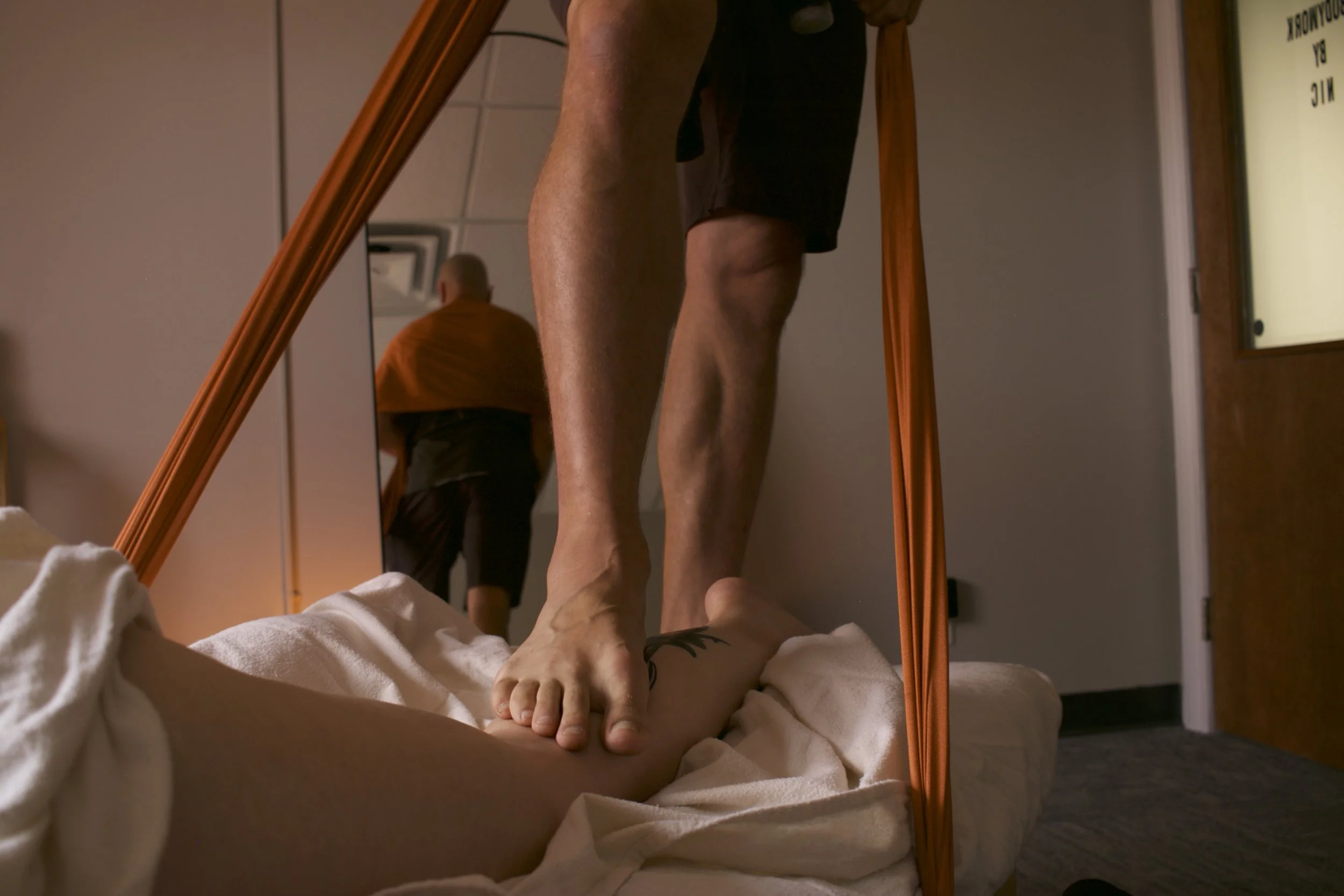
Myofascial work focuses on the connective tissue that links the body together.
When that system is under constant stress or load, tension doesn’t just stay in one place. It spreads, compensates, and recurs in the same areas.
Instead of working individual muscles, this approach applies sustained pressure across larger areas to influence how tension is organized throughout the body.
The goal isn’t to go deeper. It’s to apply pressure in a way your body can actually adapt to.
Why Deep Tissue Doesn’t Always Hold
Deep tissue can feel effective in the moment. But if the underlying pattern doesn’t change, the same areas tighten again.
That’s not a pressure problem.
It’s a pattern problem.
Myofascial work is slower and more deliberate, focusing less on intensity and more on how pressure is distributed through the system so the result actually lasts.
How This Work Is Applied
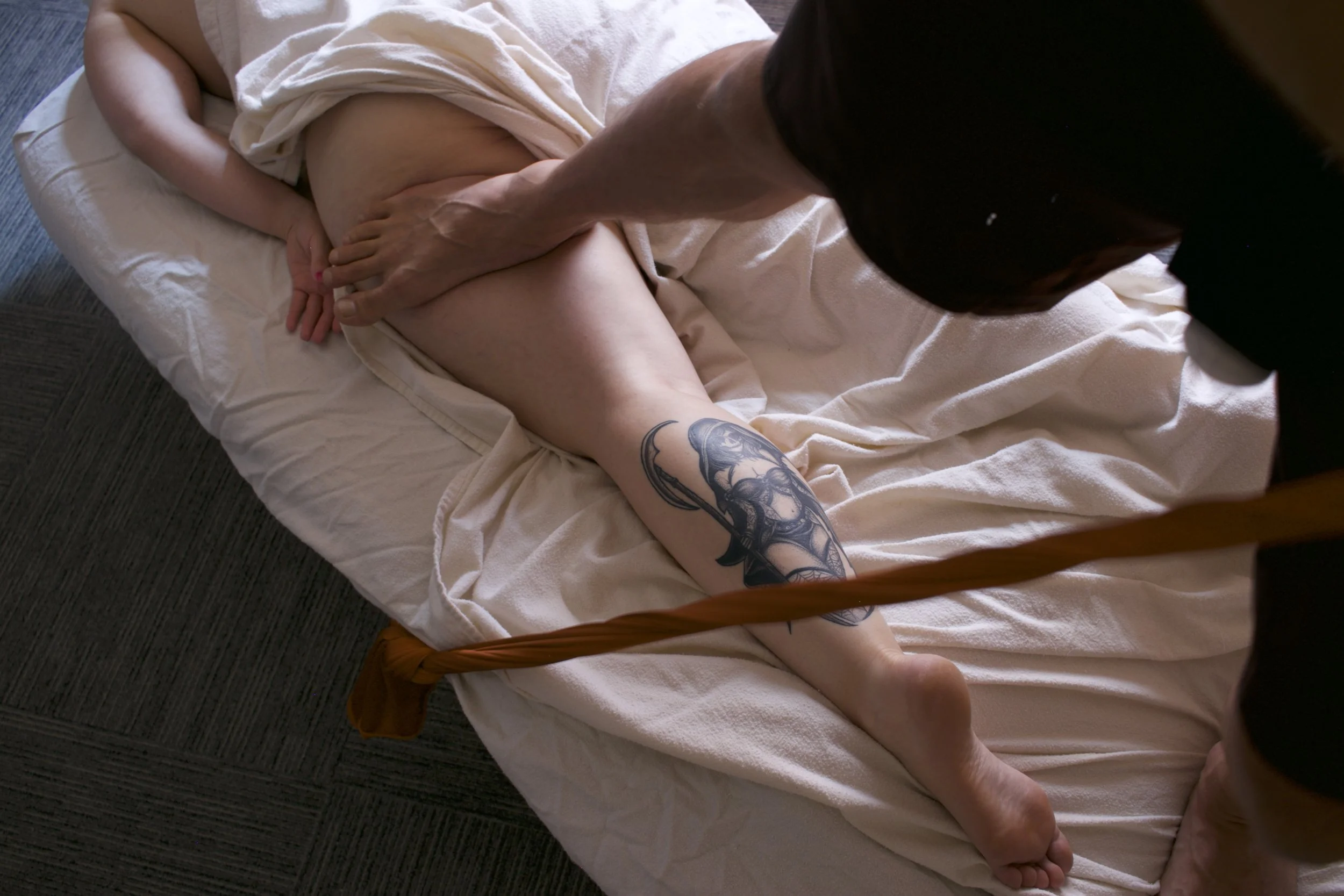
Sessions are led with barefoot Sarga bodywork, using bodyweight and broader contact to create controlled depth without forcing it.
This allows pressure to be applied gradually across larger areas, giving your body time to respond instead of bracing against the work.
There’s no preset routine. Each session follows how your body is holding tension that day and adjusts accordingly.
What Changes Over Time
Most people notice changes in how their body feels and responds, not just temporary relief.
Tension becomes less persistent. Movement feels easier without forcing mobility. Breathing improves, and recovery becomes more consistent between training and work.
Over time, the body feels more stable and less reactive under stress.
The goal isn’t short-term relief. It’s resilience.
Who This Is For
This work fits people who feel chronically tight despite doing the right things.
You train, stay active, or carry a lot of stress, but the same areas keep tightening back up. You’ve tried stretching, mobility work, or massage, and while some of it helped, nothing really held.
If you’re looking for relaxation, this probably isn’t the right fit.
If you’re looking for a more deliberate approach to recurring tension, it likely is.
How We Start
All new clients begin with a 120-135minute session. That’s where we see how your body responds to pressure, where it holds tension, and what starts to change when the work is applied the right way.
From there, the session is built in real time based on what your body gives us.
This isn’t about fixing everything at once. It’s about creating a clear shift and establishing the right direction so the work actually holds.
If it makes sense to continue, you’ll have access to shorter/longer session options moving forward.
Book a Session
If your body keeps tightening back up no matter what you do, this is a different approach worth experiencing.
Frequently Asked Questions About Myofascial Bodywork
What is myofascial bodywork?
Myofascial bodywork focuses on the connective tissue that links muscles and distributes tension throughout the body. It uses sustained pressure rather than short bursts of force to influence larger tension patterns.
How is this different from deep tissue massage?
Deep tissue often focuses on localized muscle work. Myofascial work addresses broader tissue lines and applies pressure long enough for the body to adapt rather than resist.
Is Sarga the same as Thai massage?
No. Sarga is a barefoot myofascial method designed for controlled, sustained pressure along fascial lines.
How many sessions are typically needed?
That depends on your history and goals. Many clients begin with 2–3 sessions before reassessing.
Is this good for athletes?
Yes. It is commonly used by individuals who train regularly and experience recurring tension or recovery challenges.